Why Your Line Needs a Buffer: The 15 Minutes After Exposure
A buffer is the cheapest piece of equipment on a PCB line and the one that most often decides whether the line runs at all. It does two jobs: it holds panels while the next process is not ready, and on certain processes it holds them for a fixed time because the chemistry needs it. The second job is the one buyers underestimate.
The fifteen minutes after exposure
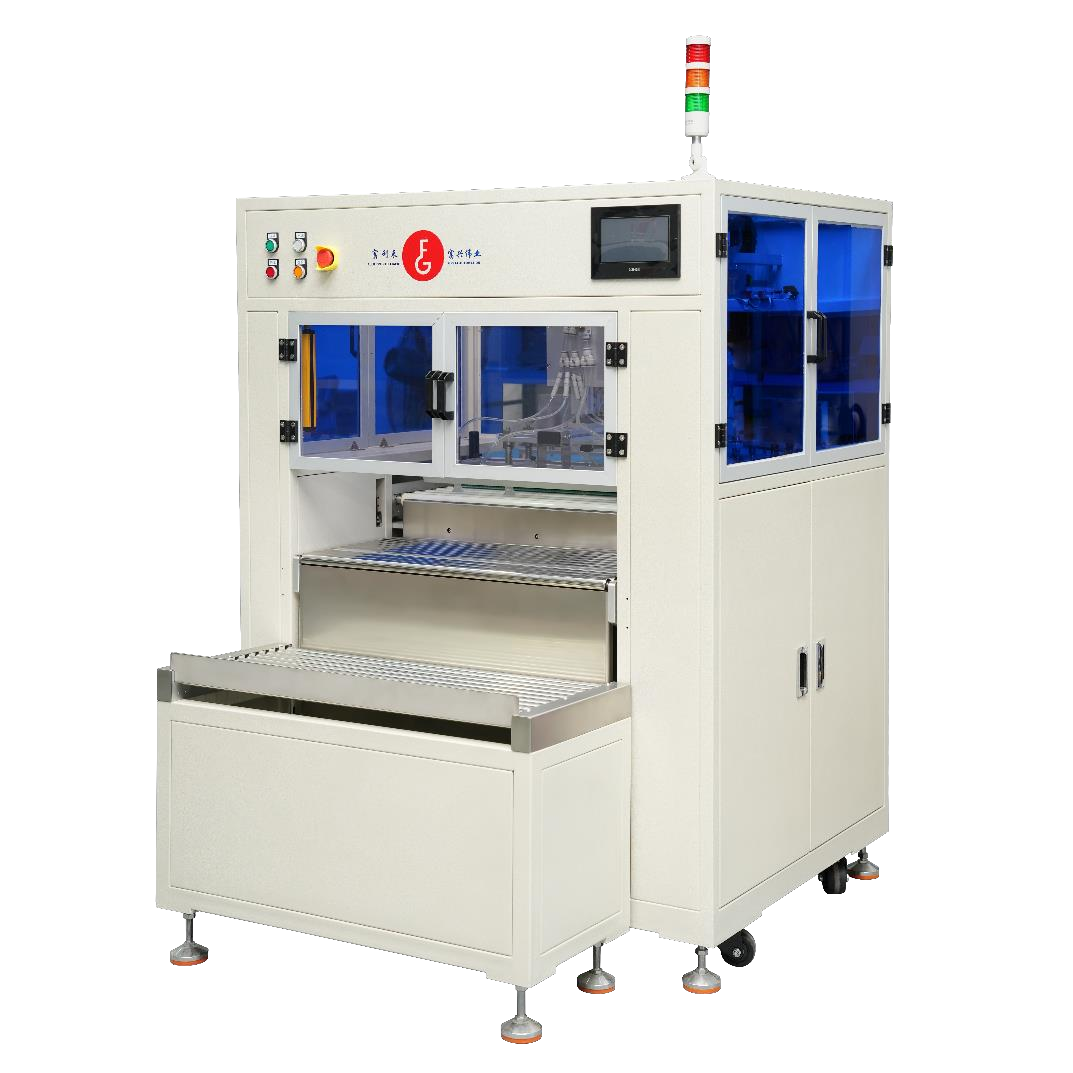
After exposure, the resist needs time before it meets the developer. Our 90-panel vertical flip buffer is built around that: it accepts panels straight from the exposure machine, holds them, and discharges them to the developer on a first-in, first-out basis, with the dwell time set so that every panel gets the required interval between inlet and outlet.
Doing the same job by hand costs three things. Floor space, because panels in stacks occupy trolleys and aisles. Yield, because every manual move is a chance to scrape the resist side. And connection, because a manual buffer cannot handshake with the exposure machine, so the exposure machine has to stop while someone moves panels.
| Model | Buffer capacity | Thickness | Speed | Purpose | Power | Weight |
|---|---|---|---|---|---|---|
| G-VFB7090 | 90 panels | 0.2-3.2 mm | 6-8 PNL/min | static time after exposure, feeds developer | AC380V 2 kW | 1500 kg |
| G-VFB7180 | 180 panels | 0.2-3.2 mm | 6-8 PNL/min | cooling between edge grinding and X-ray | AC380V 2 kW | 2000 kg |
| G-BM707 | 20 panels | 0.075-3.2 mm | 8-10 PNL/min | balancing dry film laminator and printer, NG storage | AC220V 600 W | 300 kg |
| G-LRAU301Z | about 150 panels | 0.4-3.2 mm | 8-10 PNL/min | rack-based buffering, ends at another process | AC220V 800 W | 400 kg |
| G-HB202 | about 200 panels | 0.075-3.2 mm | 8-10 PNL/min | horizontal cart buffer, side or vertical exit | AC220V 800 W | 400 kg |
| G-PTM030 | 30 panels, cyclic flip | 0.4-3.2 mm | 8-10 PNL/min | cooling or flipping between processes | AC380V 500 W | 200 kg |
| G-PTM001 | single panel flip | 0.075-10.0 mm | 8-10 PNL/min | flip between LDI or inkjet printers | AC220V 1.5 kW | 300 kg |
Sizing a buffer with arithmetic, not instinct
Take the inlet rate and multiply by the time you need to cover. At 8 panels a minute, 90 slots buy about 11 minutes; 180 slots buy about 22. If your downstream machine stops for five minutes for a resist change at 10 panels a minute, you need at least 50 slots, and you should not buy 50, because the buffer is also the shock absorber for every other stop in the shift.
The reverse calculation matters too. A buffer that is too large holds panels long enough for the dwell time to exceed the process window. On the exposure-to-develop line that is a yield problem, not a convenience problem, so sizing has to be done with the required static time written down, not estimated.
Flip, lift or horizontal
Vertical flipping is a floor-space decision. A 90-panel buffer standing 2.65 m tall occupies about 2.4 x 2.05 m of floor; the same capacity laid out horizontally would occupy a corridor. In a plant where aisles are already tight, the vertical machine is the only one that fits, which is why almost every inner layer line uses one.
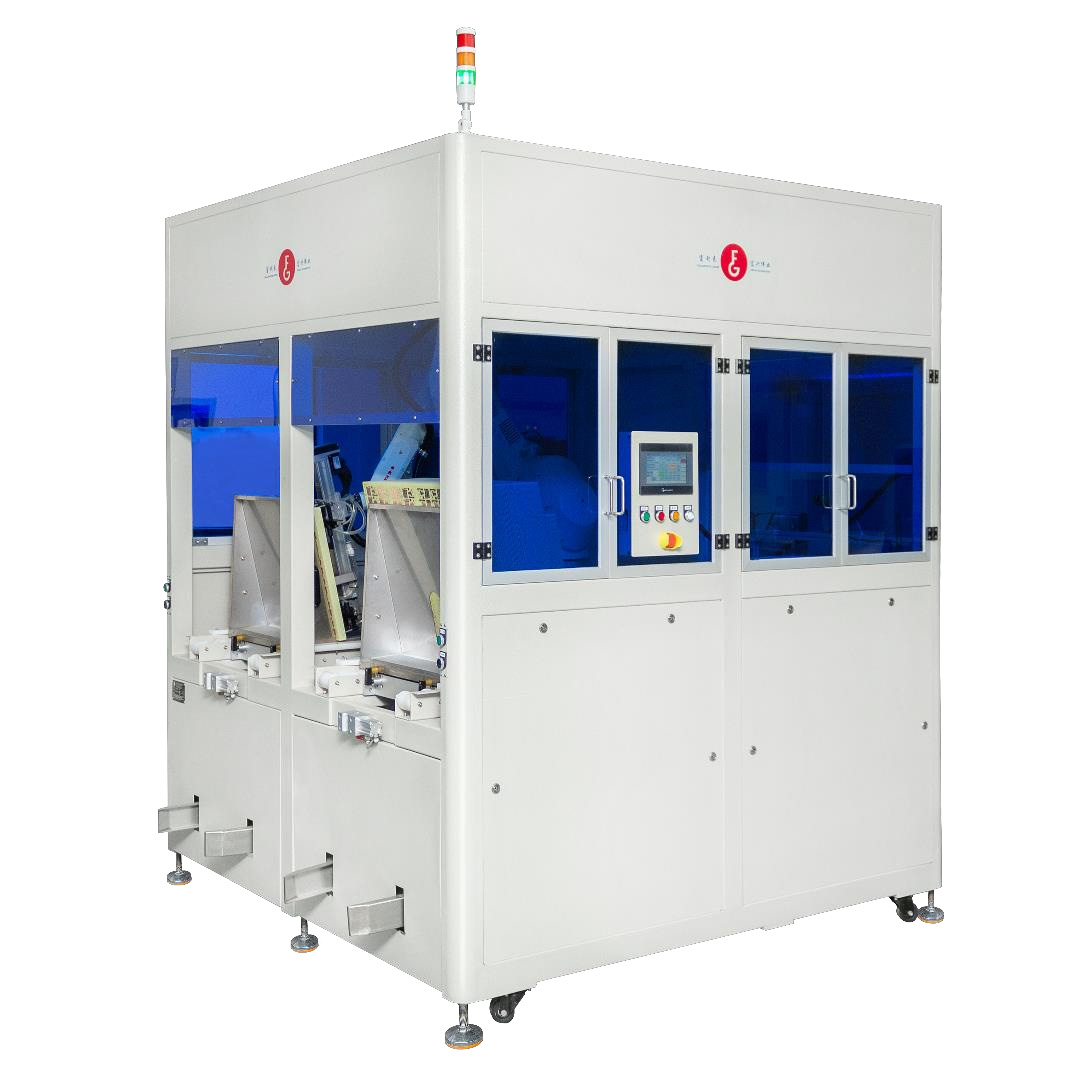
Vertical lifting suits a different case. G-BM707 holds only 20 panels, but it decides its output from the downstream signal and discharges last in, first out, and it has a second mode for NG panels. Between a laminator and a printer whose speeds drift apart, 20 slots of intelligent buffering is enough to stop the constant stop-start.
Horizontal buffering is the least disruptive to install. It takes the carts your operators already use, needs no rack inventory, and can be specified with side exit or vertical exit. When a line is being automated in stages, this is usually the first buffer to arrive because it changes nothing about the existing material flow.
Two mistakes we see on site
First, buying the buffer after the main machines. A line assembled without a buffer has its layout and its handshake signals fixed already, and retrofitting one usually means moving a machine, not adding one. Second, buying capacity without buying the signal. A buffer that cannot receive a stop signal from downstream is a shelf, not a buffer; make sure the handshake list exists before the machines ship.
Before you order
Send us the two process speeds, the required dwell time if any, and the floor area you can spare. We will size the buffer and tell you whether flipping, lifting or horizontal is the right shape for the space, and if the answer is that you do not need one yet, we will say so. kevin@fulilion.com, +86 13823241155, or visit the Humen plant where the 90-panel and 180-panel buffers run on our demo line.