L-Rack, Cantilever, Horizontal or U-Rack? Choosing the Right PCB Loader
A loader and an unloader can share the same conveyor, the same PLC and almost the same frame, and still fail in completely different ways because of the way panels are presented at the front end. In practice four presentation methods cover most of the inner layer and outer layer lines, and picking the wrong one shows up later as racks that do not fit, thin panels that curl, or an operator walking back and forth all shift.
This article compares the four directly, using the numbers from our own datasheets, and then gives the decision rules we apply when a customer sends a line layout.
The four frame types
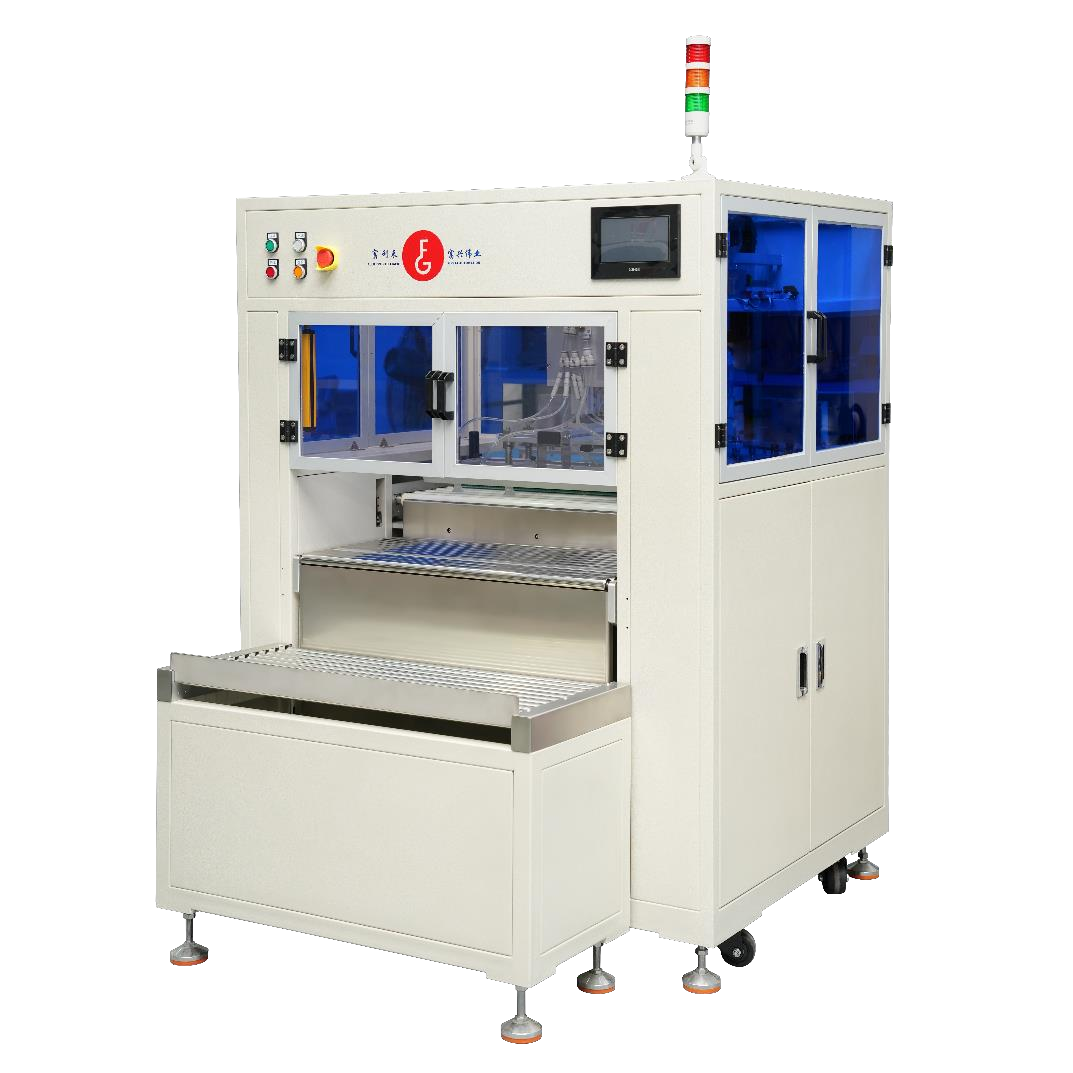
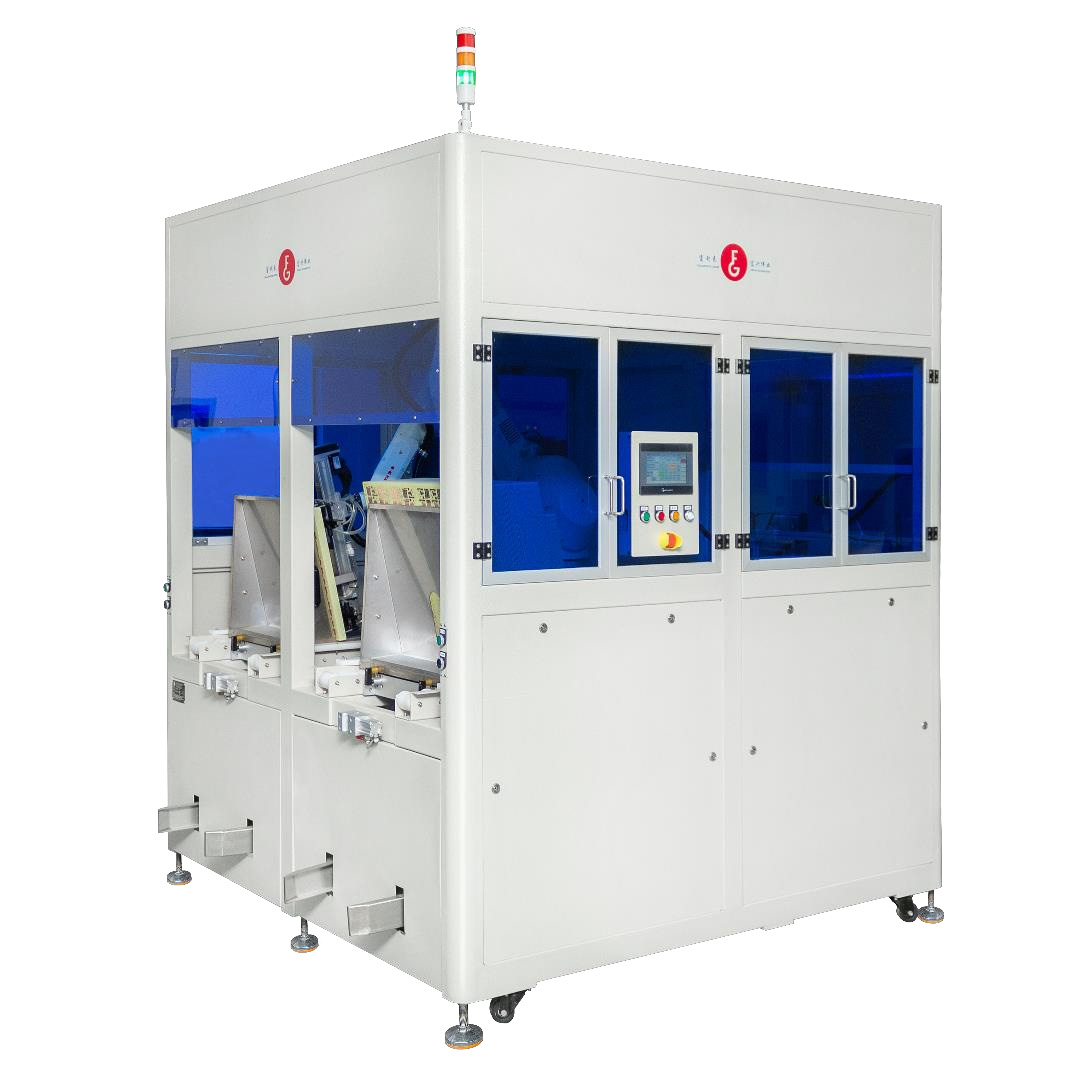
An L-rack loader feeds the rack itself into the machine, so the panel stays flat in the rack until it is picked. The cantilever loader keeps the rack outside and reaches into it with an arm, which is why it can handle very thin panels: nothing pushes the stack. The horizontal type works from a cart with pallets, picking panels from a flat stack with suction. The U-rack type is built around a 304 stainless U-shaped rack that is exchanged automatically, which is what exposure and developing lines need.
| Item | L-rack G-LRAL300 / G-LRAU301 | Cantilever G-IAU901F / 901S | Horizontal G-SPC403 / G-SPS403 | U-rack G-URAL302 / G-URAU303 |
|---|---|---|---|---|
| Inner conveying width | 860 mm | 860 mm | 788 mm | 900 mm |
| Max panel | W730 x L630 mm | W650 x L550 mm | W650 x L550 mm | W730 x L630 mm |
| Min panel | W300 x L300 mm | W300 x L300 mm | W300 x L300 mm | W300 x L250 mm |
| Thickness | 0.5-3.2 mm load, 0.4-3.2 mm unload | 0.075-3.2 mm | 0.075-3.2 mm | 0.4-3.2 mm |
| Speed | 8-10 PNL/min | 8-9 PNL/min | 0-8 m/min | 6-8 PNL/min |
| Rack or pallet | two L-racks plus hydraulic trolley | two L-racks plus hydraulic trolley | one cart, two pallets, side or vertical exit | one 304 U-rack plus trolley |
| Change over without stopping | unloader has temporary storage | rack exchange at the machine | second pallet | automatic rack exchange |
| Alignment | alternating clap, brush wear even | central clap | alternating clap | central clap |
| Power and weight | 600 W, 300 kg | 1 kW, 500 kg | 800 W, 400 kg | 2 kW, 500 kg |
| Footprint | L1470 x W1250 x H1100 | L1500 x W1300 x H2050 | L870 x W1750 x H1800 | L2377 x W1882 x H1750 |
Note the height column. The L-rack and horizontal machines stand around 1.1 to 1.8 m, the cantilever and U-rack reach 2.05 and 1.75 m. On a line squeezed between two rows of equipment, the vertical dimension decides whether the machine fits at all, long before the price does.
Five decision rules
- Thickness first, always. Under 0.4 mm only the cantilever, horizontal and robot families qualify. If your mix includes both 0.075 mm cores and 3 mm backplanes, the cantilever is the safe single answer, because its arm does not push the stack.
- Exposure and developing take the U-rack. The reason is not speed, it is handling: the panel is transported inside the rack from exposure to develop, and the rack is swapped without an operator touching a panel. Six to eight panels a minute is slower than an L-rack, and on those lines the panel is worth more than the seconds.
- Scrubbing and HAL take the L-rack, but check the clap. Alternating left-right clapping spreads brush wear across the full width, which extends brush life and keeps the surface consistent from the first panel of the shift to the last. Central clapping is the right choice when your downstream machine needs the panel centred.
- AOI and cleaning lines take the horizontal type, and the exit direction is a floor plan decision. Side exit needs clear space beside the machine, vertical exit stacks upward. The same model is sold in both versions, so do not accept a machine that only fits the drawing.
- High mix, short runs: buy the rack inventory, not the fastest machine. Two racks on the loader, temporary storage on the unloader, and a trolley at working height means a changeover costs seconds rather than a stopped line. This is the cheapest capacity you can add.
What the datasheet does not tell you
Rack count is a hidden cost. A line that changes product twice a shift needs at least four racks per machine to keep running, and racks wear: the stainless ones last, the cheap ones do not, and a bent rack is a scratched panel. Ask for the rack drawing before you buy machines from two different suppliers, because a 5 mm difference in slot pitch is enough to make them incompatible.
Second hidden cost is the trolley height. Hydraulic trolleys are adjustable by design, but an operator who has to bend to floor level to load a rack will stop loading it properly by the end of the shift. Working height matters more than most buyers expect.
Getting the frame right before the price
Send us the line layout, the panel thickness range and the process on each side, and we will tell you which of the four frames fits, how many racks you need and what the changeover looks like. We can also run your panels at the Humen factory so you see the changeover yourself rather than in a drawing. kevin@fulilion.com, +86 13823241155.