PCB Loader and Unloader Machines: A Complete Buyer's Guide
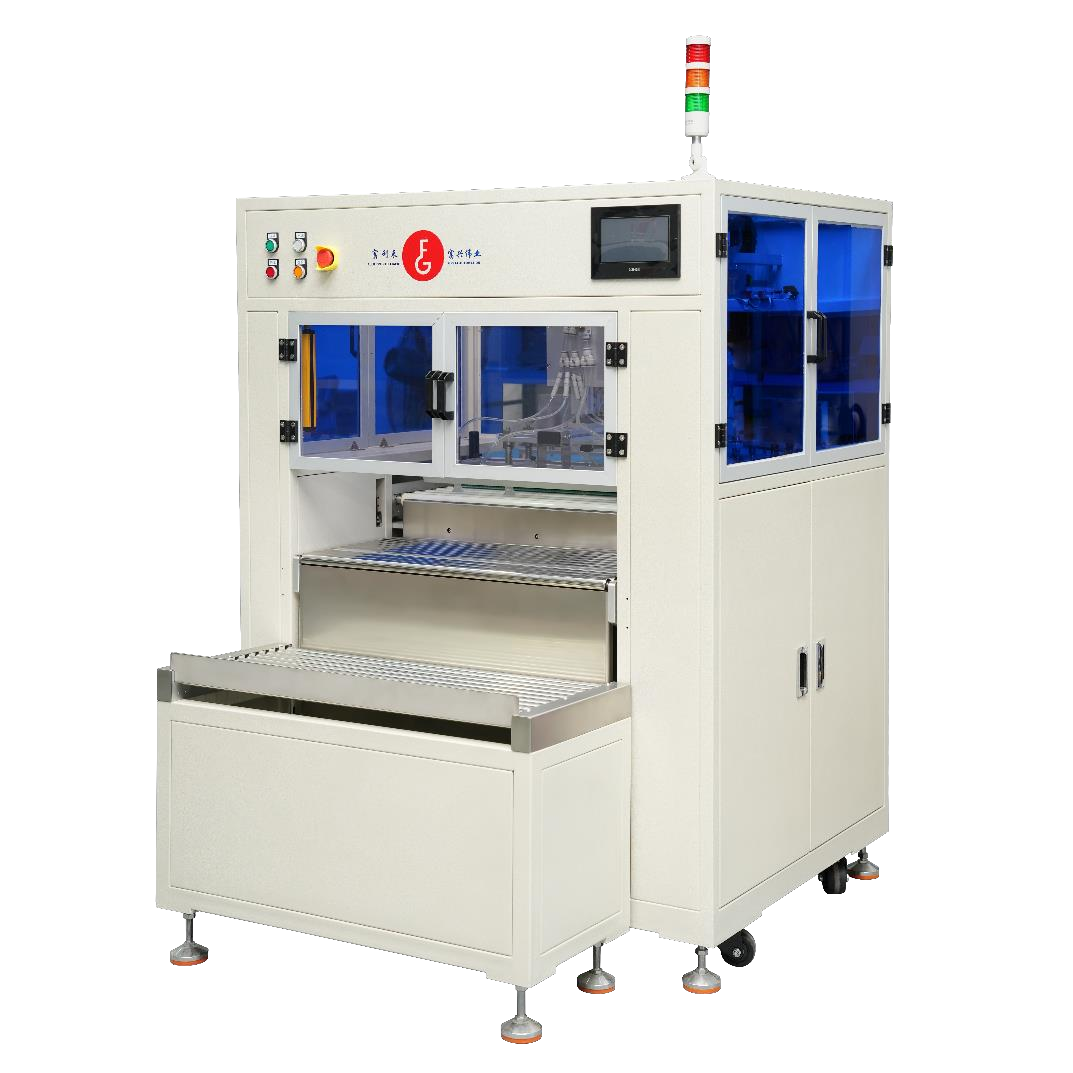
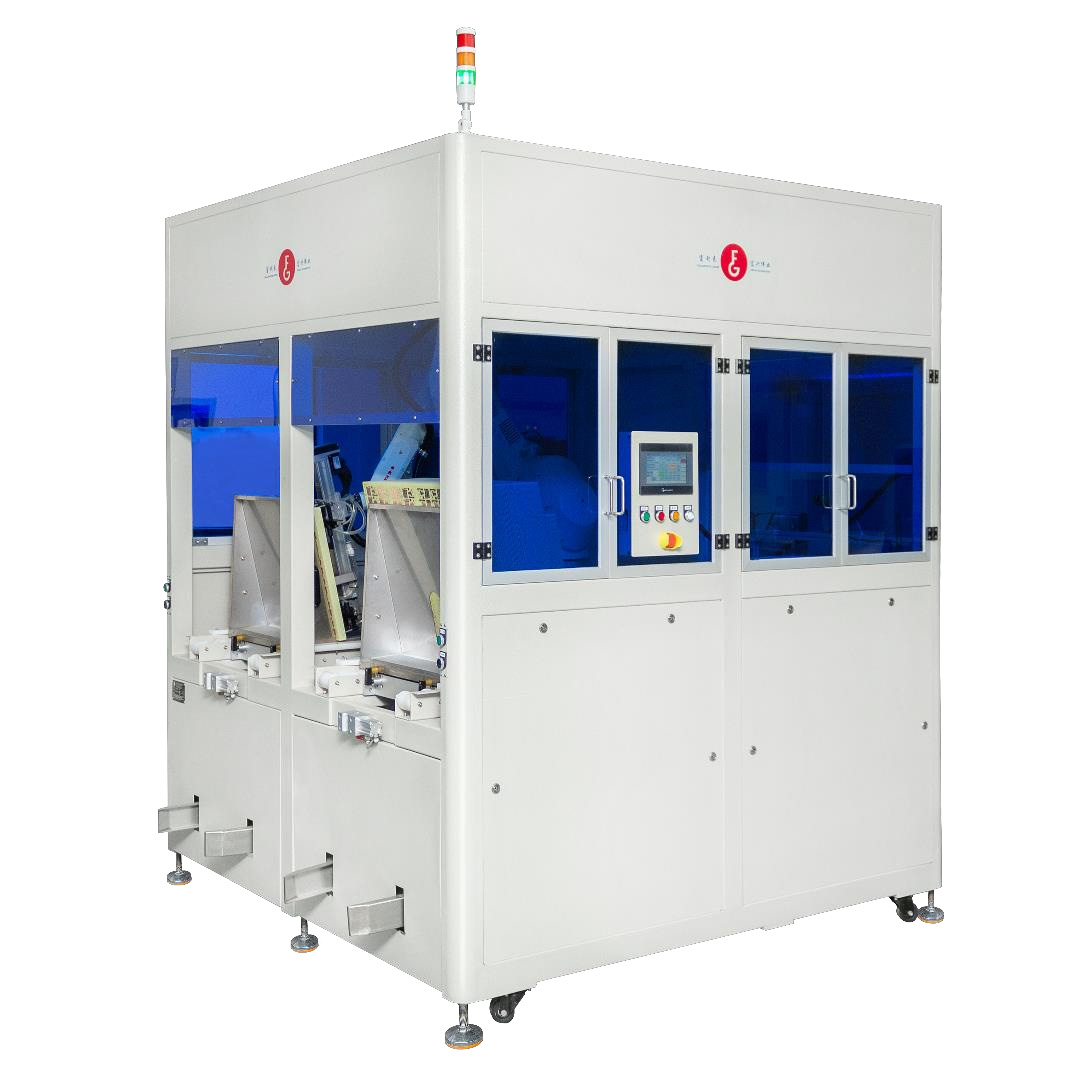
Every automated PCB line has the same weak point at both ends. Panels arrive as a stack in a rack or on a cart, have to enter the process at a fixed height and a fixed speed, and have to be collected again at the other end without being touched. A loader or unloader is the machine that closes those two ends. Choose it badly and the line runs at the speed of the person standing beside it.
What a loader or unloader actually does
Four jobs, in this order: separate the panel from the stack, align it, transfer it onto or off the conveyor at the right height, and place it back into a rack, cart or buffer without marking the surface. Everything in the specification sheet is a consequence of those four jobs.
The working envelope of the range is consistent across models: up to 730 x 630 mm, thickness from 0.075 mm at the thin end, and a lower size limit of 300 x 300 mm for most machines, 250 x 250 mm for horizontal and buffer types. Panels below that limit belong on the small-panel machines, which take down to 50 x 100 mm. If your product mix sits mostly under 250 mm, buying a standard loader is the wrong decision, not a compromise.
Nine families, one table
| Family | Models | Pick method | Speed | Thickness | Typical process |
|---|---|---|---|---|---|
| L-rack loader | G-LRAL300 | roller feeds rack | 8-10 PNL/min | 0.5-3.2 mm | scrubbing, HAL |
| L-rack unloader | G-LRAU301 | roller, temp storage | 8-10 PNL/min | 0.4-3.2 mm | scrubbing, HAL |
| Cantilever | G-IAU901F / 901S | arm into rack | 8-9 PNL/min | 0.075-3.2 mm | DES, exposure, thin panels |
| Horizontal | G-SPC403 / G-SPS403 | belt arm, side or top exit | 0-8 m/min | 0.075-3.2 mm | AOI, cleaning, scrubber |
| U-rack | G-URAL302 / G-URAU303 | automatic rack exchange | 6-8 PNL/min | 0.4-3.2 mm | exposure, developing |
| L-type paper interleaving | G-LJ402F / G-LJ402S | separate board and paper arms | 9-11 PNL/min | 0.075-3.2 mm | inner layer AOI, punching, X-ray |
| 4-axis robot | G-SR401S/F | robot, single station | 7-9 PNL/min | 0.075-3.2 mm | scrubbing, VCP, etching |
| 6-axis robot | G-SR602 / G-SR603 | robot, two or three stations | 7-9 PNL/min | 0.075-3.2 mm | same, high mix, MES and AGV |
| Delta robot | F-SPAU1208S / C | vision plus dual station | about 60 pcs/min | 0.2-3.2 mm | OSP, immersion silver or tin |
Read the speed column carefully. Nine to eleven panels a minute is the honest number for a rack-fed machine, and it is already faster than any operator over a full shift. The 60 pcs/min figure belongs to small panels on the delta robot, where the panel is a fraction of the size. Nobody should compare those two numbers directly.
Five questions that decide the model
- Panel thickness. Below 0.4 mm the L-rack family is out: the loader starts at 0.5 mm and the unloader at 0.4 mm. Cantilever, horizontal and robot machines all reach 0.075 mm, and the cantilever is the one designed specifically around thin panels, with dual ultrasonic detection at the exit that returns the panel if two have fed together.
- Which process sits at each end. Exposure and developing want a U-rack, because the rack is exchanged automatically and the panel never leaves the 304 stainless frame. Scrubbing, PTH, VCP and etching want an L-rack or a robot. AOI and cleaning lines want a horizontal type, which also lets you choose side exit or vertical exit depending on floor space.
- Whether anyone has to change a rack while the machine is running. Temporary storage and multi-station designs exist for exactly this: the robot keeps working at one station while an operator swaps a rack at another. On a line running three shifts, this is the difference between a machine that waits and a machine that does not.
- Signal and MES. Steering machines and the two- and three-station robots can be connected to MES, and the robot stations can interface with AGV. If your plant is moving toward lights-out, this is worth paying for now rather than retrofitting later.
- Footprint and interface height. Conveying height is standardised at 1050 mm +/-30 mm, and inner conveying width varies from 760 to 900 mm between models. A machine that does not match your existing conveyor height becomes a mechanical problem on site, not a software one.
Where automation does not pay
Three honest cases. First, very low volume, where an operator already stands at the machine and the panel count per shift is small. Second, product that falls outside the working envelope, where no loader on the market can help and the answer is a different process, not a different machine. Third, a line that stops more often for other reasons: a loader will not fix a process that is already the bottleneck, and buying one first usually delays the real fix.
What we ask before quoting
Four numbers: maximum and minimum panel size, the thickness range you actually run, the panels per minute you need, and the process before and after the machine. With those, the frame type and the station count follow, and the quote is a configuration rather than a price. Send them to kevin@fulilion.com or call +86 13823241155. If you would rather test than read, bring your own panels to the Humen factory and we will run them on the machine that fits, then hand you the readings.